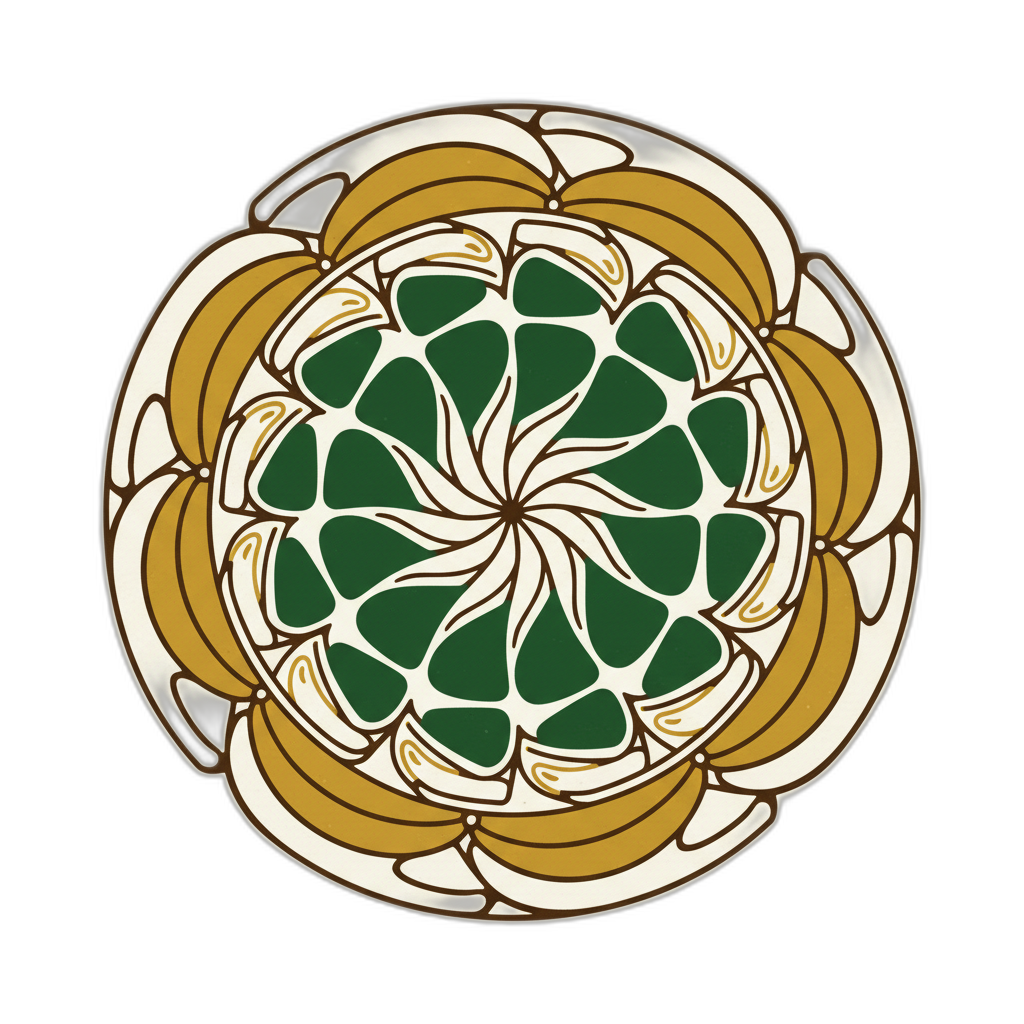
The cell is not a diagram.
It is a living argument.
Phylum turns pre-med anxiety into fluency — through interactive diagrams, annotated lectures, and 247 MCAT-mapped concepts that teach you to reason through biology, not just recall it.
Fig. I — Eukaryota composita · Membrane-bounded organelles after Ernst Haeckel, 1899
ATP synthesis via oxidative phosphorylation — the cell's power plant
Chapter 1 · Free
Start to unlock progress
Click an organelle.
Understand it instantly.
Nucleus
nucleus
The control center of the cell. Houses chromosomal DNA and directs gene expression. Bounded by a double-membrane nuclear envelope perforated by ~3,000 nuclear pore complexes per cell.
MCAT: Nuclear pore selectivity, chromatin condensation, and nucleolus function are high-yield topics.
This is real learning, not a demo. Click any organelle on the diagram or use the pills above.
From organelle to ecosystem.
Every concept earns its place.
Every module maps directly to MCAT Biology/Biochemistry content categories and AP Biology units — no filler, no re-watching.
Cell Biology & Ultrastructure
Where everything begins — membrane, nucleus, organelle function
Membrane Transport & Signaling
Passive diffusion, active pumps, receptor kinetics, second messengers
Genetics & Gene Expression
From Mendel to CRISPR — inheritance, transcription, translation, regulation
Cellular Metabolism & Energetics
Glycolysis, TCA cycle, ETC — follow every electron
Evolution, Ecology & Systems
Population genetics, ecological modeling, ecosystem simulation
Download the full syllabus with learning objectives
47 pages · MCAT content mapping · AP unit alignment · Sample questions
Three learners.
Three different reasons to be here.
MCAT first-attempt pass rate among Phylum completers
Average AP Biology score for students who complete Module 01–03
Average time for nurses to reach microbiology competency
MCAT content outline concepts explicitly mapped in the curriculum
“I spent a month with Kaplan and understood nothing about gene regulation. Phylum's interactive transcription module clicked it in 40 minutes. The annotations feel like a professor wrote in the margins for me.”
Priya Venkataraman
Pre-med, University of Michigan
“My teacher covers everything but the diagrams in the textbook are dead. Phylum's cell diagram is alive — I clicked on every organelle the night before the AP exam and finally understood why the mitochondria produces ATP the way it does.”

Marcus Osei-Bonsu
AP Biology, Jefferson High School
“I graduated nursing school in 2012 and microbiology felt like another language by 2024. Phylum's pacing is exactly right — it doesn't assume you know nothing, but it rebuilds the foundation without condescension.”

Kathleen Drozd
RN returning to microbiology

Curriculum by Dr. Ananya Krishnamurthy
Ph.D. Molecular Biology, Johns Hopkins · 8 years teaching MCAT prep · Former HHMI research fellow · Co-author of Cellular Mechanics (Oxford University Press, 2022)
Watch how we teach
membrane transport.
This is a real lecture from Module 02. Annotated, paced for MCAT depth, and designed to build from first principles — not memorization.
Module 02 · Membrane Transport
Passive diffusion · Active pumps · Facilitated transport · MCAT BIO/BC §2.1
Chapter One is completely free. No card. No account.
4 hours and 20 minutes of content covering all 18 cell biology concepts. Interactive diagrams, annotated video lectures, and 42 practice questions — before you decide anything.
Start Chapter One Free18 concepts · 4h 20m · 42 practice questions
Download the Full Syllabus
47 pages · All 7 modules · MCAT + AP alignment · Sample questions per module